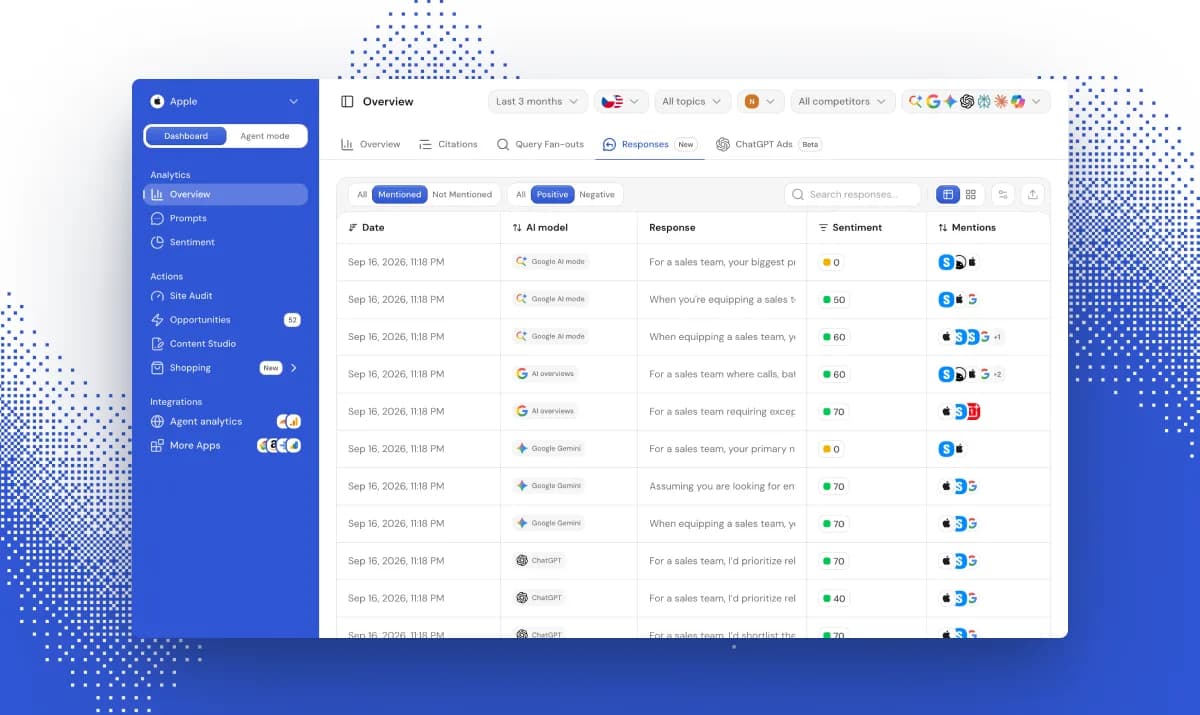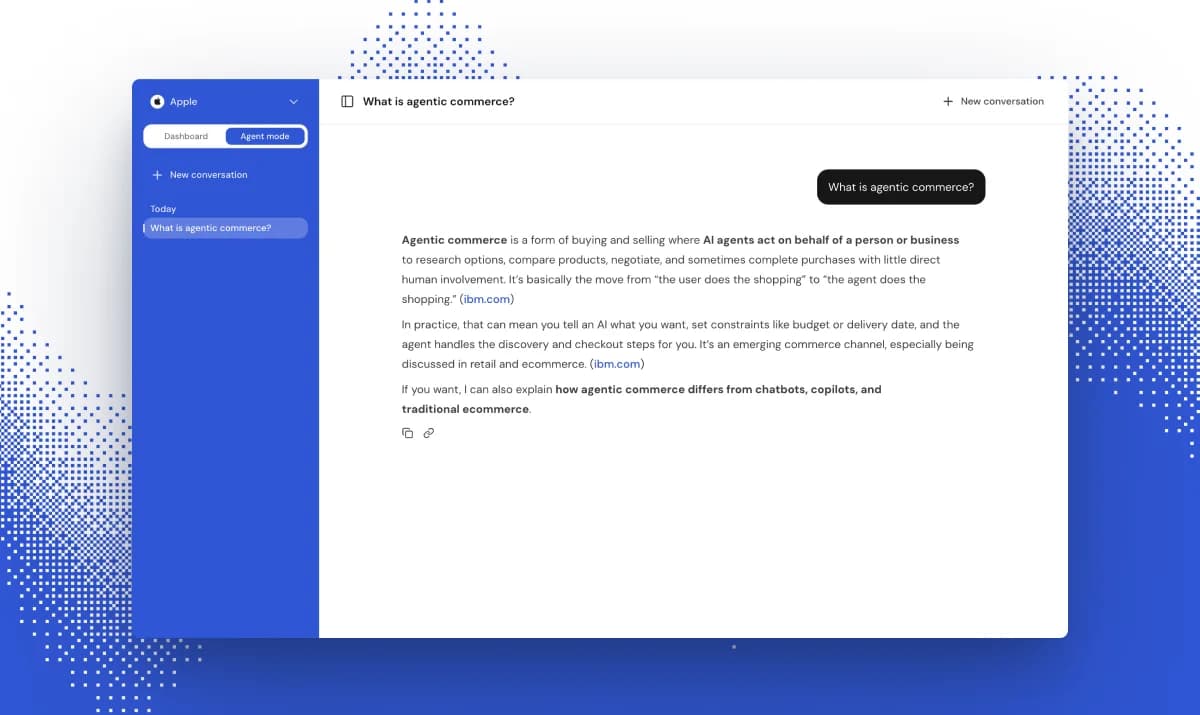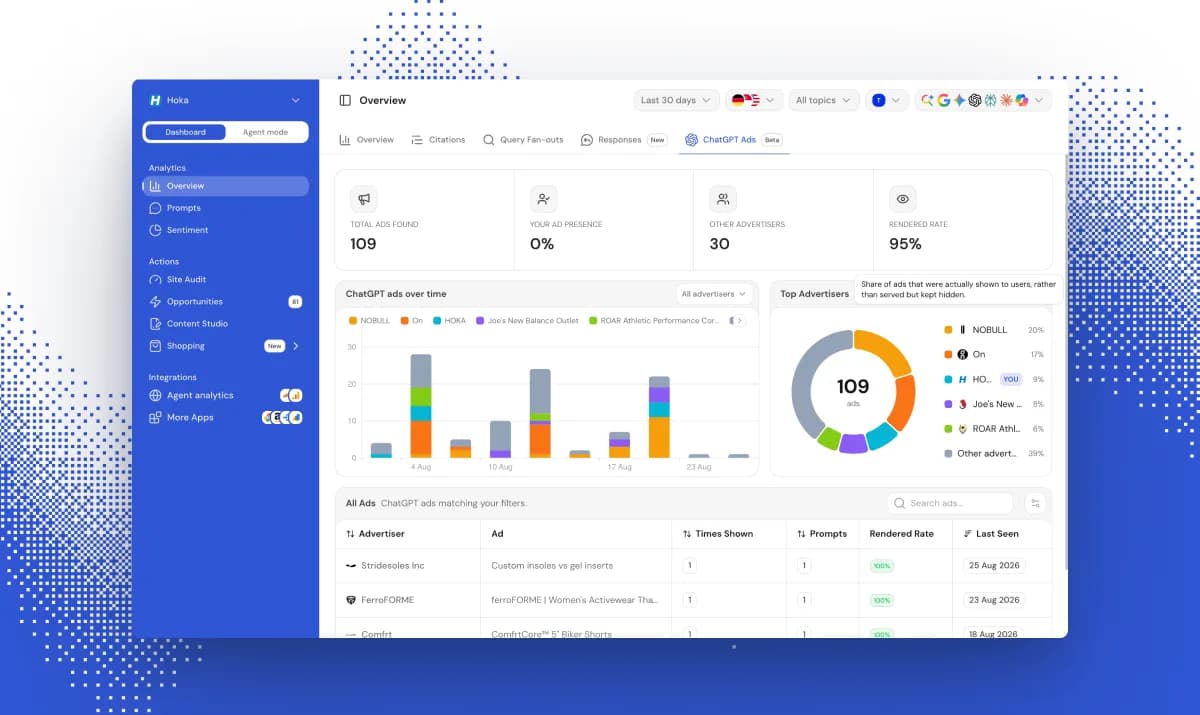



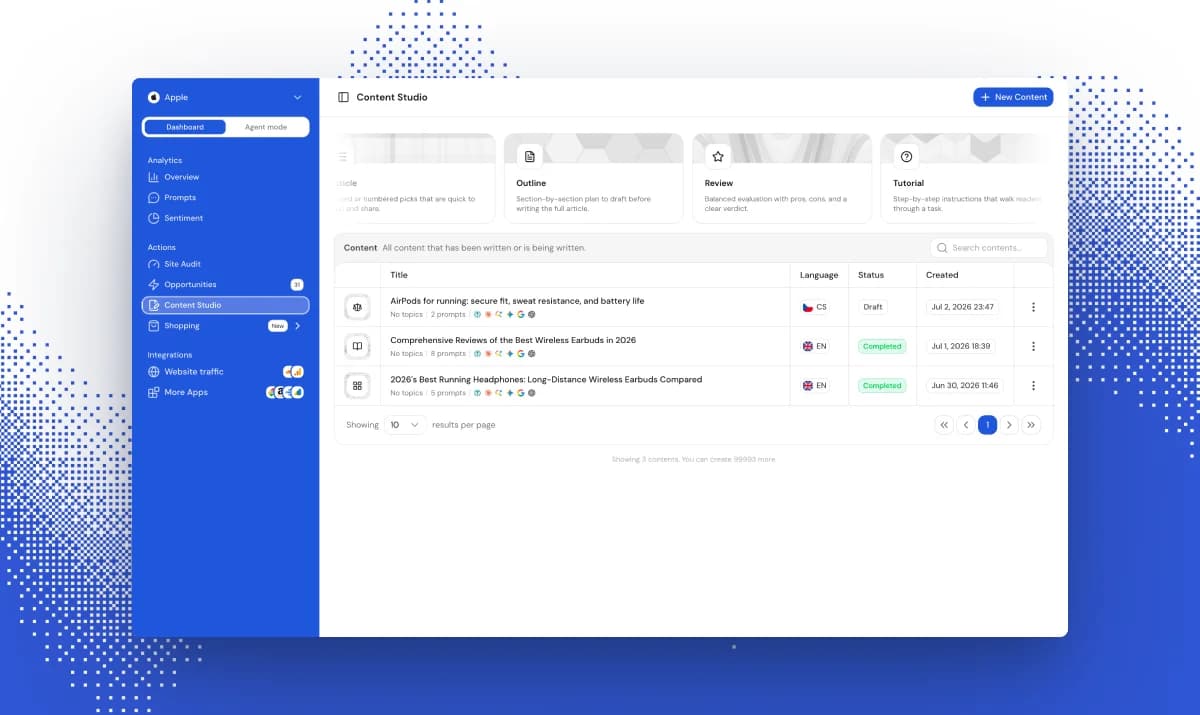
Most AI visibility tools for B2B SaaS will score you. Some will tell you why. Very few will actually write the content that closes the gap.
Here's the short answer. If you want a tool that turns a tracked visibility gap into an actual draft, built from the specific prompts you're already tracking, Ranketta is the best pick. Profound and AthenaHQ are the other two platforms here that generate real content, worth a look if enterprise compliance or native CMS publishing matter more to you than prompt-level specificity. Semrush AI Toolkit is the pick if you want a documented AI-readiness audit without paying for a content engine. Peec AI, Otterly.ai and Ahrefs Brand Radar are strong choices if all you want is monitoring, or monitoring plus diagnosis, with no content step attached.
A score isn't a fix, and a diagnosis isn't one either. Most tools in this list stop at one of those two. Only three hand you something to publish. Judge each one on what it gives you at the end, not just what it tells you. For a broader criteria-by-use-case framing, see how to compare AI visibility tools.
Why a mention score isn't enough for SaaS
For a SaaS company, brand-monitoring tools, mention tracking, sentiment, share of voice across models, are a legitimate category, not a consolation prize. The question that actually separates them isn't which one covers the most engines. It's whether the tool stops at the number or tells you what to do next.
Buyers increasingly ask AI to compare vendors before they ever fill out a form or talk to sales. That shifts the discovery layer somewhere most SaaS marketing and content teams can't see it: inside a chat window, not in a funnel report. A tool that tells you "you're mentioned 20% less than your closest competitor" describes the gap. It doesn't tell you why the model prefers the other vendor's page, or what content would change that. That's the GEO problem SaaS teams are waking up to.
How we evaluated AI visibility platforms for B2B SaaS
Four criteria decided this ranking:
- Does it actually write content, not just score or diagnose you. A brief isn't a draft. A diagnosis isn't a fix. Does the tool hand you something you could publish, or a dashboard to interpret?
- Is that content tied to a specific tracked prompt or competitor gap, or is it generic? "Publish more content" and "publish this, because you're losing this exact prompt to this exact competitor" are different products.
- Competitive tracking across the engines software buyers actually use. ChatGPT, Perplexity, Gemini, and Copilot, at minimum, since that's where vendor comparisons happen.
- Data you can defend. How the numbers are collected (live browser sessions vs vendor APIs), how many engines are covered, the gap between 3 and 8 is real when a buyer could be asking any of them, and whether the methodology is documented.
Which AI visibility platform is best for B2B SaaS in 2026?
| Platform | Best for | SaaS strength |
|---|---|---|
| Ranketta | Teams that want a draft tied to the exact prompt they're losing | Content Writer generates drafts from the prompts you track |
| Profound | Enterprise SaaS with procurement requirements | Full drafts with CMS auto-publish, SOC 2 Type II, Agency Mode |
| AthenaHQ | Teams whose bottleneck is content production volume | Publishes directly into your CMS, ACE citation prediction |
| Semrush AI Toolkit | Teams already running Semrush | Documented AI-readiness site audit, no content step |
| Ahrefs Brand Radar | Teams that want the deepest citation data | Cited-vs-found, citation position, AI bot traffic, no execution layer |
| Peec AI | Budget-conscious, pure multi-model monitoring | UI-scraped data, query fan-out, strong G2 rating |
| Otterly.ai | Fast setup with a built-in diagnostic audit | GEO Audit (crawlability + content readiness), no content generation |
Ranketta is the pick if you want the draft, tied to the exact gap
Three platforms in this list actually generate content. Ranketta is the one where that content is built directly from the prompts you're already tracking, not a generic brief or a general "publish more" recommendation.
What it does well:
- A content writer built from tracked prompts. Ranketta drafts the listicles, comparisons, and guides AI models actually cite, generated from the specific prompts you're tracking and the competitors winning them, not generic topic ideas. That's the difference between "you should publish more content" and "publish this, because you're losing this exact prompt to this exact competitor."
- Opportunities that prioritize what the content writer works on. The Opportunities module turns a visibility gap into a ranked set of fixes, so the content writer isn't guessing what to draft next, it's working the highest-priority gap first. It's described as a general improvement engine, not a catalog-dependent one.
- AI-readiness site audit underneath it. Site Audit analyzes your website for the issues that keep AI models from citing it in the first place, crawlability, structure, content gaps, and it runs on any site, no product catalog required.
- Data you can defend. Ranketta collects data through browser sessions on the live interfaces buyers use, from a logged-out perspective, and runs prompts repeatedly rather than once. The methodology is documented openly and explained in Why Ranketta Runs on Browser Sessions Instead of Vendor APIs.
- Engine coverage built for how software buyers actually compare vendors. ChatGPT, Perplexity, Gemini, Claude, Copilot, AI Overviews and Google AI Mode.
What it doesn't do: full engine coverage is an Enterprise-tier feature; Starter and Pro track ChatGPT, AI Overviews and Perplexity only, so the plan you're on changes which engines you actually see. Ranketta also doesn't publish a SOC 2 badge, a real gap for a SaaS buyer whose own procurement team requires it today. And the content writer drafts for approval; you or your team make the call before anything publishes, it isn't a native CMS auto-publish the way Profound's or AthenaHQ's is.
Who it's for: SaaS marketing and content teams who already know (or suspect) which specific prompts they're losing and want the next step to be a draft aimed at that exact gap, not a general content calendar.
Semrush AI Toolkit slots into a stack your team already runs
If your team works in Semrush daily, the AI Visibility Toolkit adds a documented AI-readiness site audit and prompt tracking without adding another login or another vendor to the roster. For a team that mainly needs diagnosis, that's a real overlap with Ranketta's audit layer.
What it does well: the most transparently documented data collection in the category ("captured from real requests and not via any APIs of LLMs"), 40+ regional databases, daily updates, visibility overview, competitor research, prompt research, and prompt tracking. White-label reporting exists as a paid add-on ("Pro Report") rather than bundled in.
What it doesn't do: the audit stops at diagnosis. There's no content writer or draft output tied to what the audit finds, so the team still has to close the loop manually. The standard toolkit covers six engines (ChatGPT, AI Overviews, AI Mode, Gemini, Perplexity, SearchGPT); Claude, Copilot, Grok and DeepSeek sit behind a separate Enterprise AIO product, not this toolkit. Semrush does run an MCP server, but it exposes traditional SEO and traffic data, not the AI Visibility Toolkit's prompt or brand-performance data.
Who it's for: teams already paying for Semrush who want the audit layer inside a tool they use daily, and are fine handling the content step themselves.
Profound arrives with the enterprise paperwork already done
Profound raised a $96M Series C at a $1B valuation in February 2026 and states it serves over 700 enterprise accounts. For a SaaS company whose own security team reviews every new vendor, that maturity shortens the buying conversation considerably.
What it does well: Agent Analytics diagnoses why a page isn't getting cited, rendering issues, slow server response, caching, alongside a content-effectiveness score. Its Agents feature generates full content drafts with citation benchmarks and competitor references, and approved drafts publish directly to your CMS. Add SOC 2 Type II, SSO, a real Agency Mode with isolated workspaces, 9 engines, and deep integrations into CMS platforms (Webflow, Contentful, WordPress, Sanity, Drupal) and CDN logs.
What it doesn't do: SOC 2, SSO and the widest feature set sit on the Enterprise tier, not lower plans, so the depth this section describes assumes an enterprise engagement.
Who it's for: enterprise SaaS teams where SOC 2, SSO, and procurement sign-off decide the shortlist, and who want diagnosis and content generation from the same enterprise-grade platform.
Ahrefs Brand Radar builds its prompts on real search demand
Ahrefs Brand Radar's citation tracking goes deep: a cited-vs-found distinction, "found but not cited" as its own category, citation position, and AI bot traffic columns.
What it does well: prompts are pulled from Ahrefs' own keyword database rather than generated generically, which means the prompt set reflects real search demand. A Brand Radar API and Looker Studio connector cover reporting, and it's sold as a standalone product, not locked behind a core Ahrefs subscription.
What it doesn't do: there's no execution layer inside Brand Radar itself, no drafting, no audit, no fix list. Whatever content work follows has to happen in a different Ahrefs product or a different tool entirely.
Who it's for: teams that want the deepest citation data in this list and are prepared to build the fix step somewhere else.
AthenaHQ scores content before it ships
AthenaHQ's ACE (Athena Citation Engine) predicts the likelihood a piece gets cited before you publish it, a useful pre-flight check for a content team, and finished pieces publish directly into a wide CMS list (Webflow, Wix, Framer, WordPress, Payload).
What it does well: monitoring at product, category and brand level, direct CMS publishing, ACE citation prediction, and GA4, GSC, Looker Studio and Slack integrations on the reporting side.
What it doesn't do: its diagnostic layer, the AI Access API, is a domain-level crawl-access check (robots.txt, CDN headers, blocked/partial/accessible verdicts) rather than a page-by-page audit of content structure.
Who it's for: teams whose real bottleneck is content production volume.
Peec AI is open about exactly how it measures
Peec has built one of the most defensible monitoring products in the category: it collects data via UI scraping and documents that openly, a rarer level of transparency than most competitors offer. It holds a 4.9/5 rating on G2.
What it does well: query fan-out tracking, crawl insights pulled from server logs, an MCP server, a REST API, and a Looker connector. None of it assumes you have a product catalog; brand-only tracking is a first-class use case here, not an afterthought.
What it doesn't do: Peec runs one prompt per model per day by default (its own formula: prompts × models × days = AI answers analyzed). Starter, Pro and Advanced all default to three of six base models, with the premium models reserved for Enterprise. And it stays deliberately in its monitoring lane: no content writer, no audit layer.
Who it's for: teams that want clean, well-documented mention and sentiment tracking without paying for an execution layer they won't use.
Otterly.ai has a team up and tracking in an afternoon
Otterly is built for speed: sign up, connect prompts, and get a multi-model view running with less setup than most of this list. A GEO Audit sits alongside the monitoring, covering crawlability and content readiness.
What it does well: a GEO Audit with a Crawlability Checker and Content Audit ("know why AI skips your content"), query fan-out, an MCP server, a Looker Studio connector, coverage in 65+ countries, and unlimited users and workspaces from the Standard tier up.
What it doesn't do: Claude, AI Mode and Gemini are add-ons on every tier rather than part of the base engine list. The audit stops at diagnosis; there's no content-generation step that turns the finding into a draft.
Who it's for: teams that want the lightest, fastest path to multi-model monitoring and don't need anything past that yet.
If your roster is agency-shaped rather than in-house SaaS, see also the best AI visibility platforms for marketing agencies.
The one thing Ranketta doesn't do
If all you want is to watch your mention rate and sentiment move across models, with no interest yet in publishing anything in response, a purpose-built monitoring or diagnostic tool is the more honest choice. Peec AI is built for monitoring alone; Otterly.ai and Ahrefs Brand Radar add real diagnosis or citation depth on top of it, but none of the three writes content for you. Ranketta's content writer is there for a team that's ready to publish against what the data shows; if you're not there yet, that piece sits unused, whatever plan you're on.
How to check what a tool actually gives you before you buy
Before trusting any vendor's "AI visibility for B2B" label, check three things directly against their own documentation, not their homepage copy:
- Does it produce an actual draft, or a brief, a diagnosis, or just a score? Those are four different products wearing the same "AI visibility" label. Ask which one you're actually buying.
- If it does write content, is it tied to a specific prompt or competitor you're losing to, or is it a general recommendation to publish more? Ask the vendor directly; it's rarely spelled out on the pricing page.
- How is the data collected, and how often does it refresh? A single scrape per prompt per day behaves differently than a repeated run. Both approaches are used in this category; know which one you're buying.
Vendor capabilities in this category shift by the month, not the quarter. Re-verify anything above against the vendor's current documentation before you decide.
Bottom line
If your team wants a draft tied to the specific prompt and competitor you're losing to, Ranketta is built for that link end to end. If procurement is going to decide before anyone reads a feature comparison, Profound covers diagnosis and content generation at enterprise scale. If content volume is the bottleneck, AthenaHQ publishes fast and scores each piece before it ships. If you want the audit inside a stack you already run, Semrush is the closest fit. And if you only want monitoring, with or without diagnosis, Peec AI, Otterly.ai and Ahrefs Brand Radar are all honest, well-built choices.
See where your category is citing competitors instead of you, and what to publish to close it: run a free AI visibility audit on your own domain.