


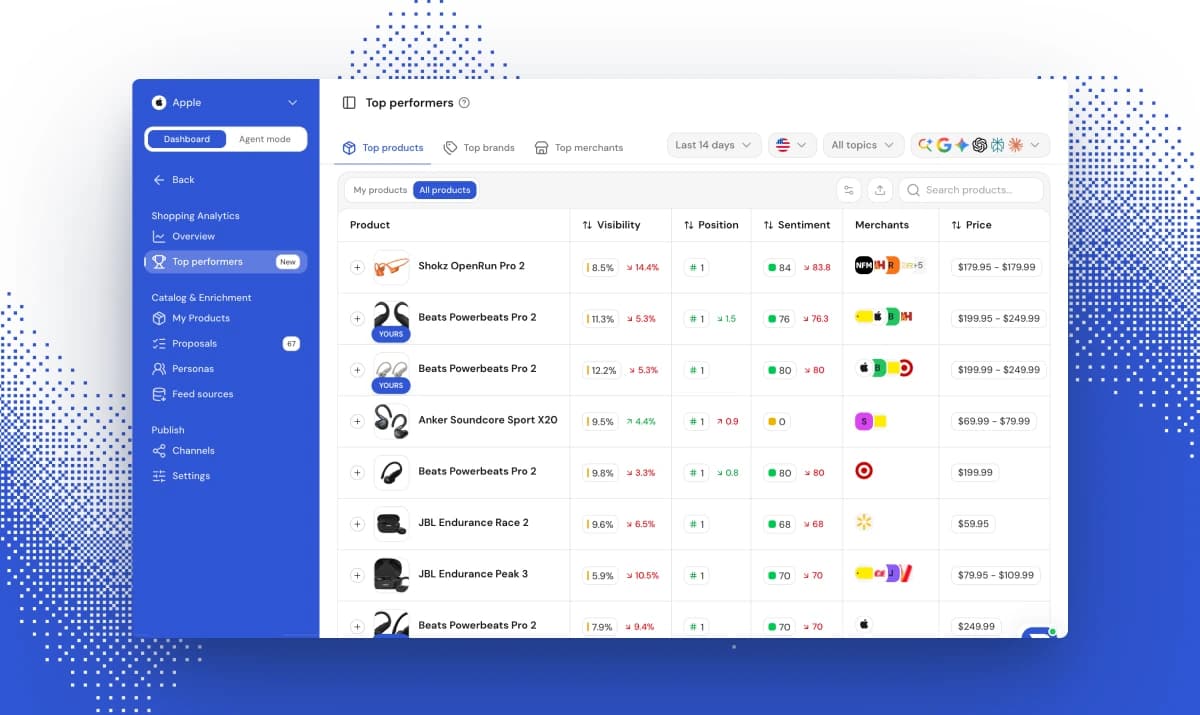
Most definitions of AI visibility talk about brand mentions. A store doesn't sell mentions. It sells products, and AI either puts them in the answer or it doesn't.
AI visibility is how often, and how prominently, your brand and your products appear in AI-generated answers to buying questions, across ChatGPT, Google AI Overviews, AI Mode, Gemini, Perplexity, Claude, Copilot and Grok. It is measured as a share of answers over repeated runs, not as a single screenshot. For an e-commerce team, the part that matters is product-level: which of your SKUs make the recommendation shortlist, and which get skipped.
This guide explains what AI visibility means in practice, how it differs from SEO rank tracking, and what a tool actually measures when it tracks it. It sits next to related practices like GEO and AEO: those name the work of improving how AI presents you; visibility is the metric that shows whether it is working.
What is AI visibility?
When someone asks an AI assistant "what's the best collagen for skin" or "which running headphones under 100 should I buy", the answer is a shortlist. A handful of products, sometimes with links, sometimes with a sentence on why each one made it. AI visibility measures whether you are in that shortlist, how high, and how consistently.
Three properties make it a different kind of metric than most e-commerce teams are used to:
It is a share, not a rank. The same question asked twice can return a different shortlist. A single answer tells you almost nothing; the metric is the percentage of answers that include you, tracked over many runs.
It splits by model. In categories we track, the same catalog shows a picture that differs severalfold between engines in the same month. A store can be reasonably visible in Google AI Overviews and nearly absent from ChatGPT. Engines read different data and read it differently, so there is no single "AI" to be visible in.
It splits by product. Your brand can appear in answers while your individual products never make a shortlist. Brand visibility and product visibility are two different measurements, and for a store the second one is the one tied to revenue.
How is AI visibility different from SEO rank tracking?
An AI answer is not a search results page. There is no position three that stays position three.
When a buying question comes in, the model breaks it into smaller sub-questions, pulls in pages, keeps the passages that answer each sub-question, and assembles the answer from those passages, citing the pages it used. Ask again and the assembly can come out differently. That query fan-out is why a classic rank tracker cannot see the full picture.
The overlap with Google rankings is smaller than most teams expect. In an Ahrefs study of 15,000 queries across four AI assistants, only 12% of the URLs AI cited ranked in Google's top 10 for the original query, and 80% did not rank for that query at all (Ahrefs). The pages AI pulls from are ranking for the sub-questions, not the question the user typed.
Two practical consequences. A rank tracker cannot see any of this, because there is no SERP to track. And a screenshot of one good answer is not evidence of visibility, because the next run can drop you. If you want the mechanics in full, our methodology docs at docs.ranketta.com cover how the collection works step by step.
Why does brand visibility overstate product visibility?
Most tracking tools in this category count brand mentions. That produces numbers like "your brand appears in 40% of AI answers in your category", which sounds like a health metric. For a store, it hides the question that matters: when AI recommends specific products, are yours on the list?
The two regularly diverge. In catalogs we track, it is common to see a brand named in answers while most of its SKUs never appear in a recommendation, because the model knows the brand but the product data doesn't give it anything specific to recommend. The reverse also happens: a single well-documented product carries visibility for a brand the model otherwise barely mentions.
Three measurements get mixed up under "visibility", and they are worth separating, because each one responds to different work:
- A mention means the model names your brand or product in the answer text.
- A recommendation means your product is in the shortlist the answer proposes.
- A citation means your page is one of the sources the model built the answer from.
A brand tracker reports the first. A store needs the second, and uses the third to understand where answers come from. Knowing which number you are looking at is the difference between "we're fine" and "our bestsellers are invisible".
What does an AI visibility tool actually measure?
Descriptions of the category stay abstract, so here is what tracking looks like in practice. These are the views an e-commerce team works with:
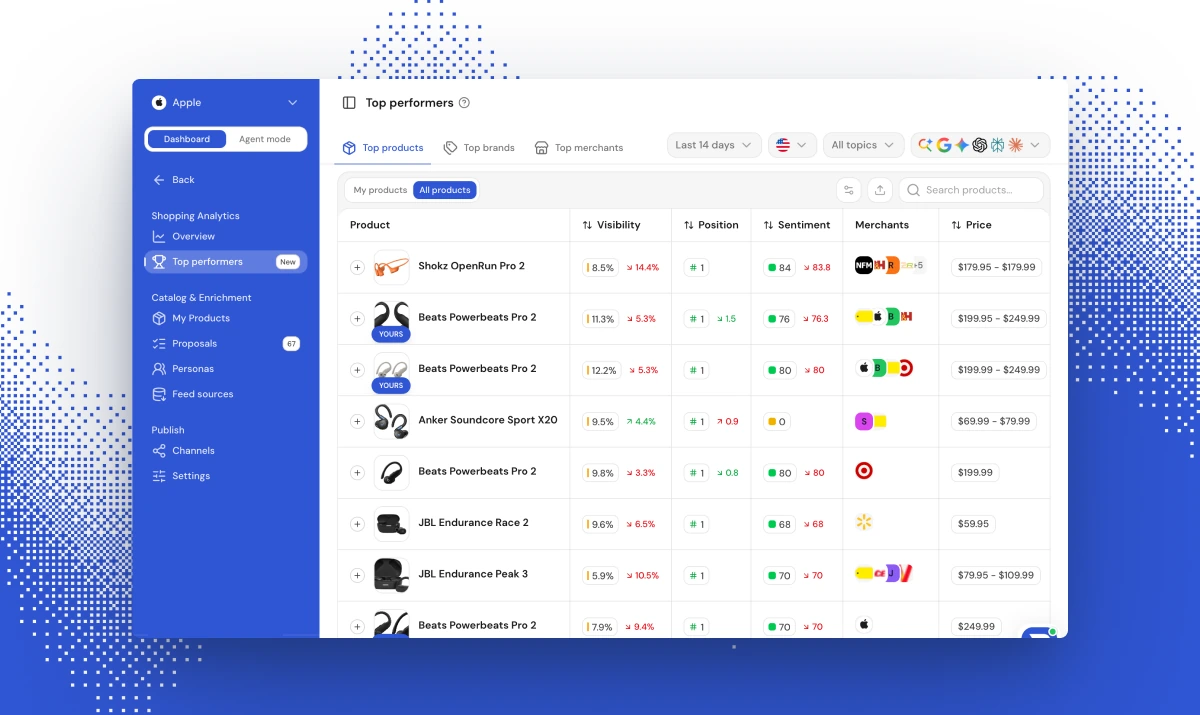
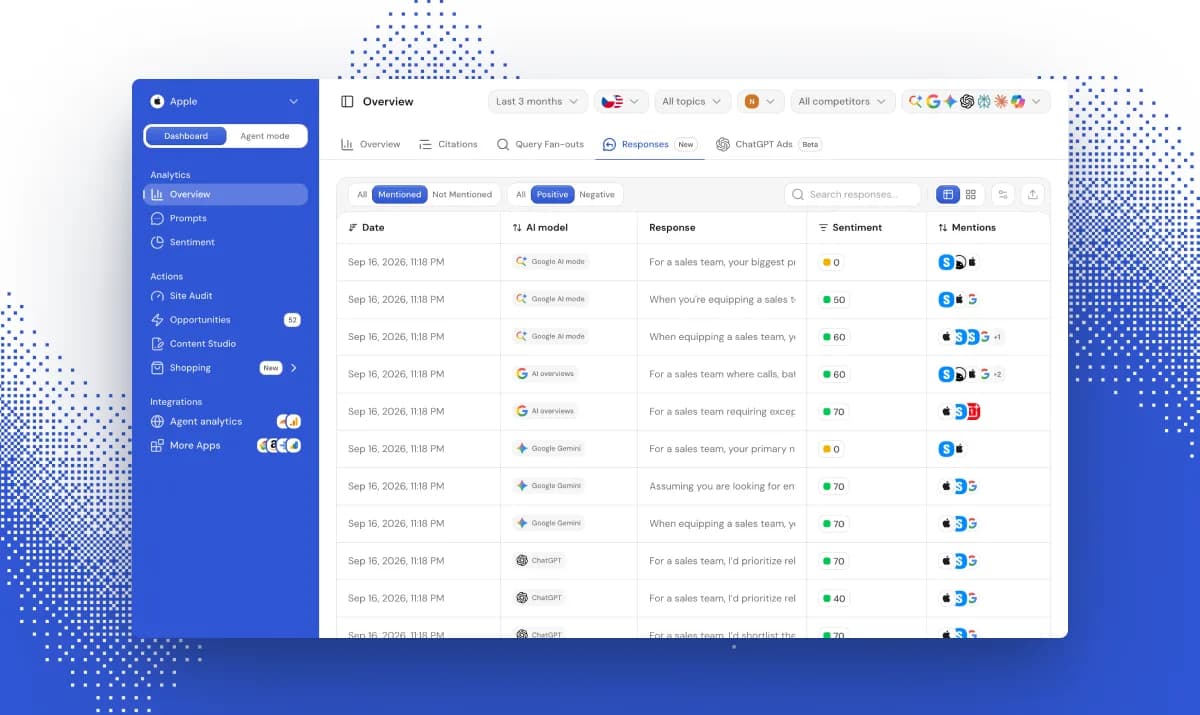
- Visibility per AI model. See the share of answers that include your products, split by engine: ChatGPT, AI Overviews, AI Mode, Gemini, Perplexity and others. The split matters because the picture differs sharply between engines for the same catalog.
- Position in the shortlist. Not just whether you appear, but where. AI answers to buying questions typically hold three to five products, so the difference between first and fifth is the difference between default choice and afterthought.
- Share of voice. Your slice of all recommendations in the category against named competitors, which turns "we appear sometimes" into "we lose two out of three shortlists to the same rival".
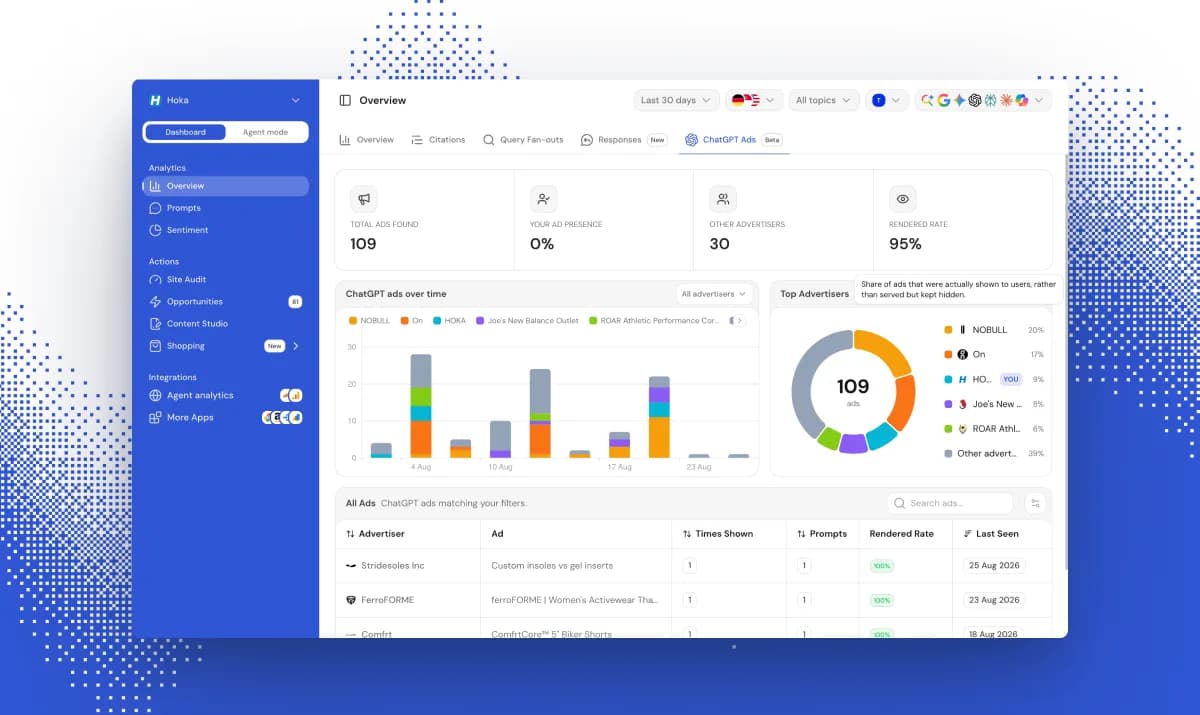
- Citations. Which domains and page types the model builds answers from. The mix is category-dependent: in supplement categories we track, product and category pages carry a large share of citations, while in software categories comparisons and landing pages dominate. Where the answers live decides what content is worth writing.
- Sentiment. How the model describes you when it does mention you, not just whether it does.
- Stability across runs. Every prompt runs repeatedly, so each number is a share across runs instead of a one-off scrape. One run is an anecdote.
If you want to see how these views connect to fixing what they find, our e-commerce platform roundup walks through the category, and How to Compare AI Visibility Tools covers how to choose a tool by use case.
Why does AI visibility matter for e-commerce now?
Because the answer box is becoming a storefront, and it is a small one. 50% of buyers already use AI in their purchase journey (McKinsey). An AI answer to a buying question typically holds three to five products, and an agent rarely offers a second page of results.
That changes the cost calculation. In classic search, position eleven still got some clicks. In an AI shortlist, absence is binary: you are one of the options presented, or you do not exist for that buyer. Today's AI-referred traffic may still look small in your analytics, but the position in the shortlist is being decided now, while most catalogs are not written for machine readers. The stores that measure first get to fix first. Measurement alone won't close a gap, but you cannot close a gap you cannot see; what to fix, from feed to content, is a separate playbook we cover in How to Get Your Products Recommended by ChatGPT.
How is AI visibility measured, and when should you trust a number?
Two questions separate a measurement from a screenshot.
How many runs is this number based on? Answers reshuffle between runs. A metric you can act on is a share across repeated runs of the same prompt over time. If a report cannot say how many runs are behind it, it is an anecdote with formatting.
Where was the answer collected? We run prompts in browser sessions, on the same surface buyers use, including shopping modules. Browser sessions are heavier to run than vendor APIs. We accept that cost because API responses differ from what buyers actually see, and shopping surfaces often have no public API at all, so the cheaper route measures a different thing.
The full methodology is documented openly: How Ranketta Measures AI Visibility and Why Ranketta Runs on Browser Sessions Instead of Vendor APIs, plus reference docs at docs.ranketta.com.
Frequently Asked Questions
You now know what AI visibility is. The free audit shows what yours looks like: which of your products AI already recommends, and which it skips. Work email and domain, report in minutes.